Follow the remarkable journey of Hast Shea Nilotica Butter, from the untouched East African savannahs to your daily skincare ritual. A story of tradition, ecology, and uncompromising quality.
Every jar of Hast Shea Nilotica Butter begins not in a factory or a laboratory, but in the vast, sun-drenched savannahs of East Africa. The journey from wild tree to your skincare routine is one shaped by centuries of tradition, deep ecological knowledge, and a commitment to doing things the right way — even when the right way is the harder way.
The Nilotica Tree and Its Habitat
Vitellaria nilotica, the Nilotica shea tree, grows naturally across the wild grasslands of Uganda, South Sudan, and parts of Kenya. Unlike the more common Vitellaria paradoxa (West African shea), the Nilotica variety grows exclusively in East Africa and has never been successfully farmed at scale. It thrives in its natural habitat, dependent on the specific soils, rainfall patterns, and ecological conditions of the region.
These trees can live for hundreds of years. The older the tree, the more abundant and richer its fruit. This is one of the reasons wild-harvesting is so important: cultivated shea trees, started from seed and grown on plantations, simply cannot replicate the depth of nutrients found in wild trees that have been drawing minerals from deep in the earth for generations.
The Harvest: A Practice Passed Down Through Generations
Nilotica shea fruits fall naturally from the trees between May and August. Local women — who have held this knowledge within their communities for generations — collect the fruits from the ground by hand. There is no machinery, no mass picking, and no harvesting before the fruit is fully ripe. Each piece of fruit is selected and gathered with care.
The seeds are then extracted from the pulp, cleaned, and sun-dried. This traditional method of preparation is not merely artisanal sentiment — it is scientifically sound. Slow, natural drying preserves the volatile fatty acids and vitamins that would be destroyed by industrial heat treatment.
Cold-Pressing: Preserving What Nature Made
Once dried, the seeds are cold-pressed to extract the butter. Cold-pressing means no heat above a certain threshold is applied during processing. Heat — even moderate heat — denatures proteins and destroys heat-sensitive vitamins, particularly vitamin E. Cold-pressing preserves everything the seed naturally contains, resulting in butter that is genuinely rich in vitamins, antioxidants, and essential fatty acids.
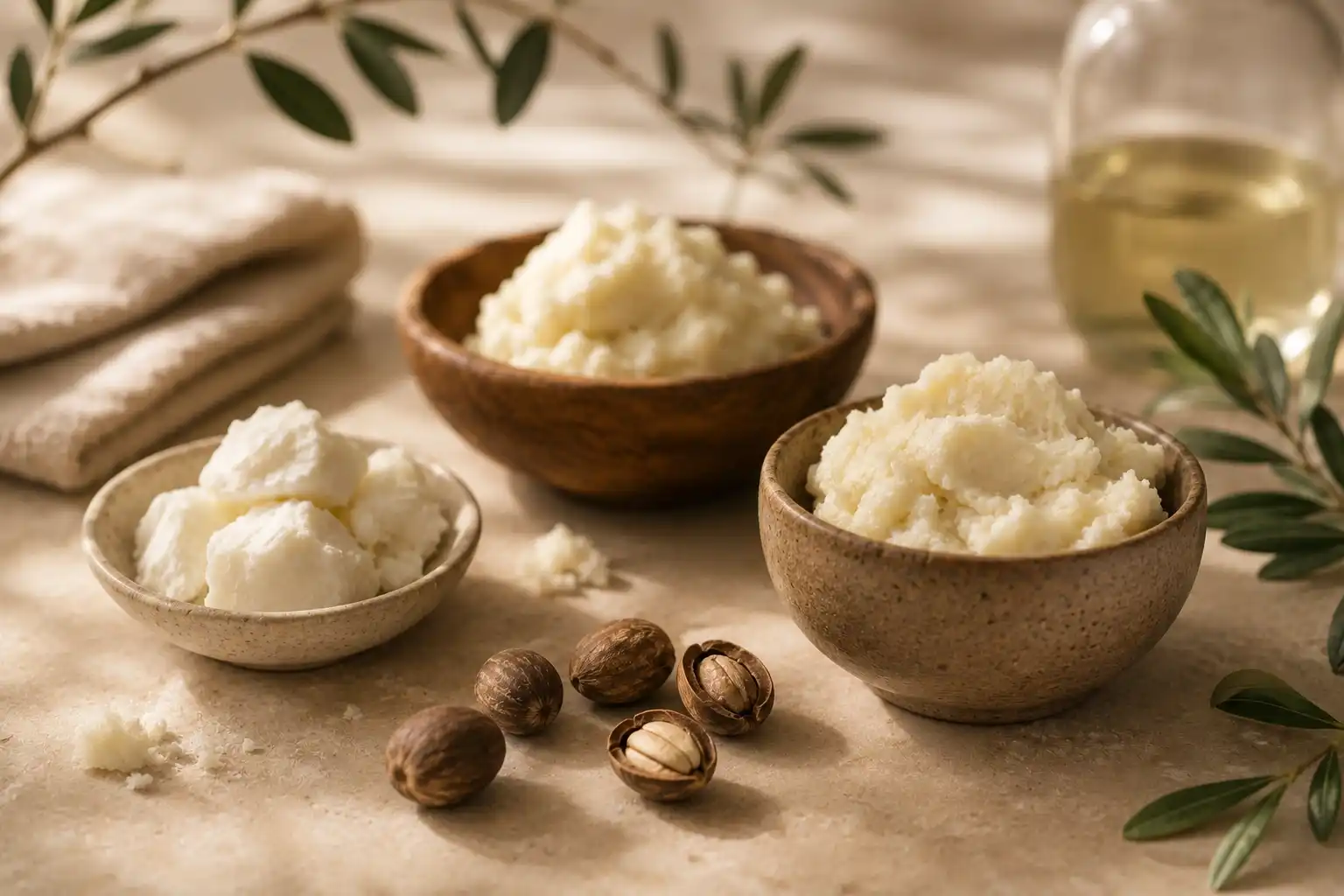
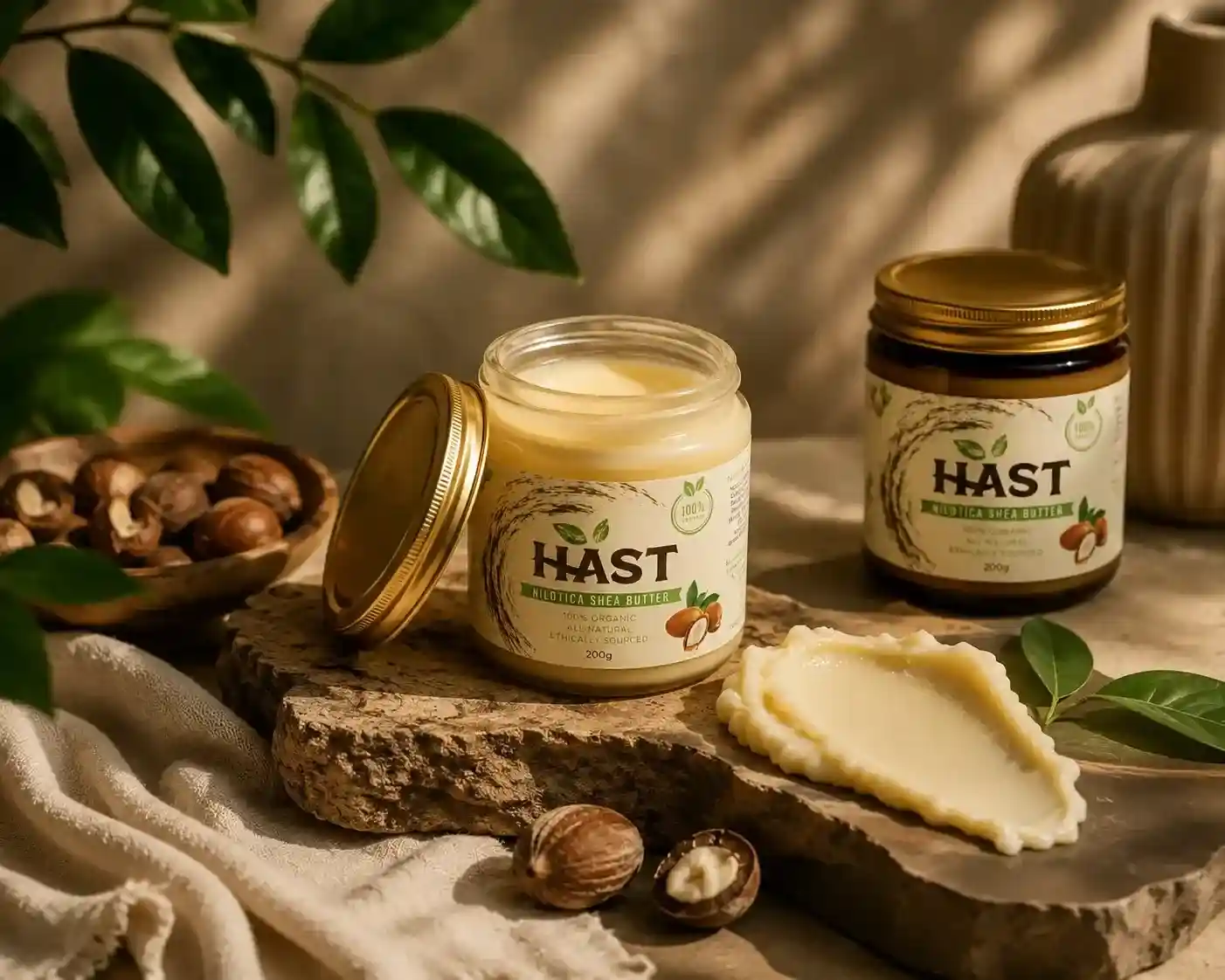
The raw butter is then filtered to remove any remaining seed particles, leaving a pure, natural product with a soft, ivory colour and a faint nutty aroma. This is unrefined Shea Nilotica Butter exactly as nature made it — nothing added, nothing taken away.
Why This Process Matters for Your Skin
The difference between wild-harvested, cold-pressed Shea Nilotica Butter and a refined commercial moisturiser is the difference between a whole food and a processed one. Refinement strips out the colour, the scent, and — critically — many of the bioactive compounds that make shea butter effective in the first place.
When you apply Hast Shea Nilotica Butter to your skin, you are applying a product whose active compounds have been in continuous development over centuries of evolution. The vitamins, fatty acids, and anti-inflammatory compounds are present in exactly the proportions that make them most effective — because they were never removed.